0% READ
FULL TEXT
INTRODUCTION
Due to their broad range of therapeutic potential, low cost, and comparatively less side effects than manufactured medications, medicinal plants gained significant attention, among medicinal plant Pistacia integerrima has considered more attraction towards because it is rich in phytochemicals. Pistacia integerrima contain many phytochemical and secondary metabolites like flavonoids, alpha-pinene, sterols, terpenoids, kaempferol, catechins, fisetin, m-cymene, fenchyl alcohol, tannins, di-limonene, caprylic acid. The plant is used for many therapeutic activity antibacterial, anti-cancer, anti-asthmatic, anti-fungal, muscle-relaxant activity. Traditionally gall of the plant is used in numerous diseases like in fever, cough, dysentery, snake bite and diarrhoea. The aim of the study is to present medicinal importance, pharmacological activity of Pistacia integerrima. 1,2,3,4
Plant Profile
Morphology
Root, stem and leaves: P. integerrima is a deciduous plant with multiple branches. It has a height of 18 and has a dark grey and blackish bark. Leaves are unto 20-25 cm long with or without terminal leaflets, Leaflets are 4-5 pairs. Leaf is characterized as an unpaired terminal, leathery texture, and three times longer than it wide. The base of the leaves is slanting appearance. Leaves are green in colour and changes into bright red in autumn. The female part of the flower lax and elongated while the male plant is compact. Flower and fruits appear in spring season (Table 1).
Geographical Distribution
P. integerrima is native to Asia and mainly spread in the Indus to Kumaon in the northwest Himalayas in India, Nepal, China and in Pakistan. It grows in dry areas dominated by stunted trees and sub-alpine belts at altitude of 900-4000 m often on hot, salt range and in Peshawar valley. The plant is also fertilized in Punjab and the parts of the Indian sub continents. 6
Ethnomedicinal Uses
Conventionally, various parts of P. integerrima are used as folk medicine for treating Snake bites, Fever, Diarrhoea, and Asthma. P. integerrima provides a remedy for Hepatitis, Inflammation, Respiratory issues. Its pivotal role in balancing Vasta and Kapha doshas, incorporated in remedy like shringyadi churna. 7 Ayurvedic market formulation of karkatshringi is available with their indications like bharat karkatshringi tablets, yuvika kakra singhi, karkatshringhi churna, that has anti-pyretic effect and lala dawasaz herbal hair oil, Dusprashadi yog (herbal compound) utilized for tropical pulmonary esoinophilla (Table 2). 8
Phytochemical Constituents
From the aerial part of Pistacia integerrima have been isolated and two new flavonoids glycosides have been identified those are: -pistacides A and B (1-2) with other constituents are: 2'-hydroxyisoorientin (3), echiodimin2'-O-β-d-(6"-O-acetyl) glucopyranoside (4), chrysoerial (5) and diandraflavone A (6). 11 The biological screening was done to identified the essential oil present in the gall. By hydrodistillation followed by liquid-liquid extraction volatile chemical constituents were obtained. The gall was rich in p-meth-1-en-8-ol, n-octyl acetate,1-tepinen-4-ol, and beta-Faresene. The conc. of alpha-terpinolene, limonene, and alpha-thujene were less 12 and also have resin, pentadienoic acid, camphene, luteolin, amino acids, tannins, tetracyclic, triterpenes, pistancin and dihydromavalic acids. The bark of the plant has terpenoids, flavonoids, tannins and alkaloids and also contain carbohydrates, sterols, saponins by various methanolic, hexane, aqueous fraction and leaves contain tannins, flavonoids as same present in roots. 13 The leaves galls have essential oils that are Alpha-pinene, sabinene, beta-pinene, Iso-Borneol, Terpinen-4-ol, Endo-bornyl acetate, Alpha-Longipinene, m-Cymenyl, Beta-Phellandrene, Beta-Myrcene, Fenchyl alcohol, Verbenone, Oxygenated sesquiterpenes, Monoterpene-hydrocarbons, Bicyclogermacrene (Table 3). 14
Pharmacological Activities
Anti-cancer activity
Current research indicates Pistacia integerrima significant anticancer potential, which is mostly due to its flavonoids and phenolic components. Among these, penta-O-galloyl-β-D-glucose showed strong antiproliferative activity against human lung cancer cells by suppressing ERK/STAT3 signalling and triggering the AMPK-ULK1 pathway to cause ROS-independent autophagic cell death. 32 Flavonoids that were extracted from P. integerrima also indicated strong in vitro and in silico antiproliferative activity against a numerous of cancer cell lines, indicating their potential as multitarget anticancer drugs. Based on a different study, bioactive substances extracted from Pistacia integerrima galls reduced the growth of cancer cells by modifying apoptosis and several carcinogenic signalling pathways. 21,22
Cellular mechanism
P. integerrima galls possess numerous of phytochemicals and used traditionally used in various disease. Natural molecules have a promising result against cancer. Extraction of gall was done by using hydro-methanolic extract then column chromatography was done to isolated the specific compound that exhibit the activity. Penta-O-Galloyl-β-G-glucose (PGG). AS49 (lung cancer cell line) was utilized to investigate the isolated compound. It exhibited serval changes in cell line in which phosphorylation of AMPK which activates the AMPK it stimulates ULK1(Ser317) phosphorylation it starts the autophagy process (Figure 1). It covert the LC3-1 to LC3-2 which confirms autophagy activation. Chloroquine or Wortmannin (cell viability rescue) are added which are autophagy inhibitor shows that autophagy contributes to cell death. STAT3 and ERK1/2 are the pathway which promote cancer cell survival, isolated compound suppresses these pathways. Isolated compound activates caspase-3 which leads to cleave of pro-caspase-3(active form), which eventually cleaves PARP (DNA repair enzyme). PARP inactivation stops DNA repair, leads in DNA fragmentation and execute to Apoptosis (programmed cell death. 23
Enzyme inhibition activity
Pistacia integerrima contains bioactive acylated oligosaccharides, it has shown promising enzyme inhibitory potential. The isolated compounds that are integrisides A (1) and integrisides B (2) showed strong inhibitory activity, indicating their potential as bioactive agents for medicinal uses. According to the study, these oligosaccharides' structural properties may also play a role in their biological activity and capacity to suppress the enzymes. According to these results, P. integerrima is a useful source of natural enzyme inhibitors and merits more research in order to produce new medications. 24
Phosphodiesterase inhibitory activity
The study is implemented on the isolation and characterization of the key components from the galls of P. integerrima determined their inhibitory phosphodiesterase activity. The isolated flavonoids such as 1) Naringenin and 2) 3,5,7,4'-tetrahydroxyflavanoned used in both in vitro and in silico method. In molecular docking the extract and isolated flavonoids show strong binding interaction. The results highlight the traditional therapeutic usage of Pistacia integerrima by confirming its capacity to suppress enzymes. 25
Kingdom | Planate |
|---|---|
Division | Angiospermae |
Sub-division | Eudicots |
Class | Rosides |
Order | Sapidales |
Family | Anacardiaceae |
Genus | Pistacia |
Species | Pistacia integerrima |
Antibacterial Activity
Promising antibacterial action against a variety of pathogenic microbes has been determine by Pistacia integerrima. Substantial antibacterial activity against both Gram-positive and Gram-negative bacterial strains was demonstrated by flavonoids extracted from galls, highlight the phytoconstituents contribution to the plant's antimicrobial activity. Moreover, P. integerrima phytochemical-rich extracts demonstrated significant antibacterial activity against multidrug-resistant bacterial pathogens isolated from urinary tract infections, demonstrating their potential as substitute treatment agents for addressing antimicrobial resistance. These findings indicate that P. integerrima is a potential natural source of antibacterial. 26,27
Anti-leishmanicidal activity
The flavonoids 3,5,7,4'-tetrahydroxy flavanone was isolated from P. integerrima to determine the anti-leishmanicidal activity. The extract displayed a growth inhibition. The isolated compound exhibited more potency than extract. The 2 key important targets of antileishmanial are -Pteridine Reductase1 (PTR1) and Dihydrofolate Reductase (DHRF) of L. by molecular docking demonstrate significant interactions with active site, representing that inhibition of these enzymes may be the capacity mechanism the observed in vitro antileishmanial activity. 28
Anti-inflammatory activity
Pistagremic acid was isolated from bark, to assessed the anti-inflammatory activity. Experimental animals 'paw edema induced by carrageenan was substantially by Pistagremic acid. Dose dependent activity was shown by the compound and the modest edema inhibition, determined 3 hr after medication. To further support anti-inflammatory molecular docking studies was done in which Pistagremic acid bind with the active site of the COX-2 enzyme through hydrogen bond hydrophobic interactions, representing of prostaglandin synthesis. Methanolic gall extract has shown the anti-inflammatory activity in both acute and chronic carrageenan-induced inflammation models. Crude methanolic extract showed remarkable anti-inflammatory activity and maximum inhibition was observed after 3 hr after oral administered, and extract lower the edema in both early and late phase. The inhibition of inflammatory mediators such as serotonin, bradykinin, histamines, leukotrienes, and prostaglandins. 29,30
Muscle-relaxant activity
Pistagremic acid was isolated from the bark of the plant to assessed the relaxant activity. In different model such as the rotarod, traction, inclined plane and chimney tests, isolated compound extract, demonstrated strong dose-dependent activity. The modest result was observed specifically 60 min. After therapy compared to Diazepam it's showed moderate activity. Compound elicited remarkable relaxation in the central muscles, perhaps by modulating GABAergic pathways relatable to GABAA receptor-mediated mechanism. These finding represent that Pistagremic acid noticeable central muscle relaxant potential. 31
Antioxidant activity
The galls of Pistacia integerrima was used to determine the antioxidant activity by using DPPH radical scavenging assay. Crude extract and its fractions exhibit strong antioxidant activity. Flavonoids (1 and 2) exhibited potent antioxidant activity. These represent that the isolated flavonoids are rich natural antioxidants. Leaves and galls extracts showed outstanding activity by aqueous and ethanolic. Ethanolic extract gives best result because it extracts out more phenolic and flavonoids compound other than aqueous extract. 32,33
Anti-asthmatic activity
Symptoms of bronchial asthma, a chronic inflammatory respiratory condition, includes tightness in the chest, wheezing, coughing, and discomfort. In Wistar rats and guinea pigs, the aqueous extract of Pistacia integerrima galls showed strong anti-asthmatic effects. By reducing antigen-induced mast cell degranulation, the extract exhibited dose-dependent mast cell stabilizing impact and considerably shielded guinea pigs from histamine aerosol-induced bronchospasm. Additionally, by inhibiting histamine-induced contraction, it had a spasmolytic effect on isolated tracheal chains. These results verify P. integerrima conventional use in the treatment of asthma by indicating that its anti-asthmatic activity may be due to mast cell Sl. No.
Sl. No. | Herbal Formulations | Activity | References |
|---|---|---|---|
1. | Dashmularista | Swasa (asthma), Ajeerna (indigestion) | [7] |
2. | Shringyadi churna | Yakrit rog (liver disorder) | [7] |
3. | Chitrakadi Leha | Kasa (cough), Shvasa (asthma), Gulma (abdominal tumor) | [8] |
4. | Balchaturbhadra churna | Respiratory disease | [9] |
5. | Shringyadi Leha | Kasa (Cough) | [10] |
Sl. No. | Phytoconstituents | Structure | Pharmacological activity | References |
|---|---|---|---|---|
1. | Quercetin | 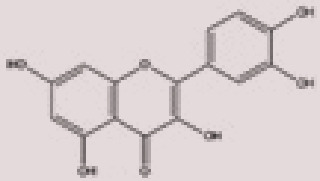 | Anti-oxidant, Anti-cancer, Anti-ageing, Anti-SARS-CoV | [15] |
2. | Patuletin | 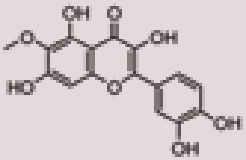 | SARS-CoV-2, Anti-proliferative, Antibacterial and Antifungal | [16,17] |
3. | Catechins | 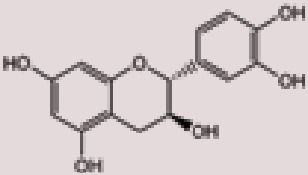 | Anti-microbial, Anti-oxidant, promoting cell activities and Anti -viral | [18] |
4. | Pistagremic acid | 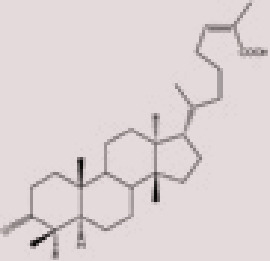 | Glucose inhibitor, Anti-pyretic, Anti-inflammatory, Antinociceptive | [19,20] |
5. | Flavonoids | 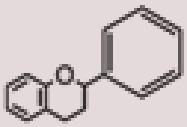 | Antioxidant, Anti-inflammatory, Cardiovascular protection | [11] |
stability, reduction of antigen-induced histamine release, and bronchodilator effects. 34
Gastrointestinal motility
Pistacia integerrima has shown enhancing gastrointestinal activity. Isolated from the galls, Pistagremic acid significantly reduced gastrointestinal motility, indicating that it may have antidiarrheal properties. In animal models, the bark extract exhibited substantial anti-gastrointestinal motility activity, supporting its long-term utilization for the treatment of gastrointestinal diseases. These results suggest that P. integerrima has positive gastrointestinal effects and could be used as a natural medicinal agent to treat gastrointestinal diseases. 35,36 Anti-diarrheal Enhanced intestinal motility and excessive fluid output are characteristic features of diarrhoea, a common gastrointestinal illness. In experiments, Pistacia integerrima demonstrated strong antidiarrheal activity. The plant's traditional use in the treatment of gastrointestinal disorders is supported by 11
Anti-diarrheal
the isolated flavonoids and plant extracts, which effectively reduced gastrointestinal motility and demonstrated protective benefits against experimentally induced diarrhoea. Bioactive phytoconstituents that regulate intestinal motility and secretion may be important for the antidiarrheal action. These findings show that P. integerrima has significant therapeutic promise as a natural antidiarrheal drug. 37
Safety and toxicity study
The aim of the research is to assessed the acute and sub-acute toxicity profiles of the methanolic extract of Pistacia integerrima. Wistar rat was used to evaluate the safety profile of plant by observing changes like in mortality, body wt. change and physiological changes. Four group divided: control group (saline) and other three was administered with Pistacia integerrima and observed their body weight, biochemistry, haematology, and histopathology. In acute study no mortality, behavioural changes (eyes, skin, fur, postures) over 14 days. In sub-acute study no toxicity signs, no body weight changes as well in haematology or biochemistry and study highlights that no toxicological symptoms. The methanolic extract of the plant observed to safe in single dose and repeated doses (NOAEL) that is No-Observed-Adverse-Effect-Level. 38 CONCLUSION Pistacia integerrima is important plant due it is rich in phytoconstituents such as flavonoids, triterpenoids, tannins, and sterol which support numerous pharmacological activities. Scientific studies, which shown its anti-cancer, anti-oxidant, anti-inflammation and anti-bacteria activities. Among its bioactive compound like tannins its derivative, polyphenol like Penta-O-β-D-Glucose have shown significant biological potential by modulating ERK/STAT3 singaling pathways. Despite promising research evidence, most studies are limited to in vitro and animal trials. Clinical trials, formulation development and standardization of extracts are insufficient. Further wellestablished pharmacological and clinical trials are important to fully developed its safety, efficacy and therapeutic suitability.
CONCLUSION
In conclusion, Pistacia integerrima illustrate a valuable natural resource with significant medicinal property, and continue research may lead to the development of novel compound.